Packaging lines
Wire and wire rod coils
We design and integrate packaging lines for wire and wire rod coils designed to work in demanding environments: metallurgy, wire drawing, steel mills, service centers, and plants with high product turnover.
Our goal is clear: to ensure the coils are compacted, strapped, protected, weighed and labeled, ready for storage or shipment with security and traceability.
What is a wire rod packaging line
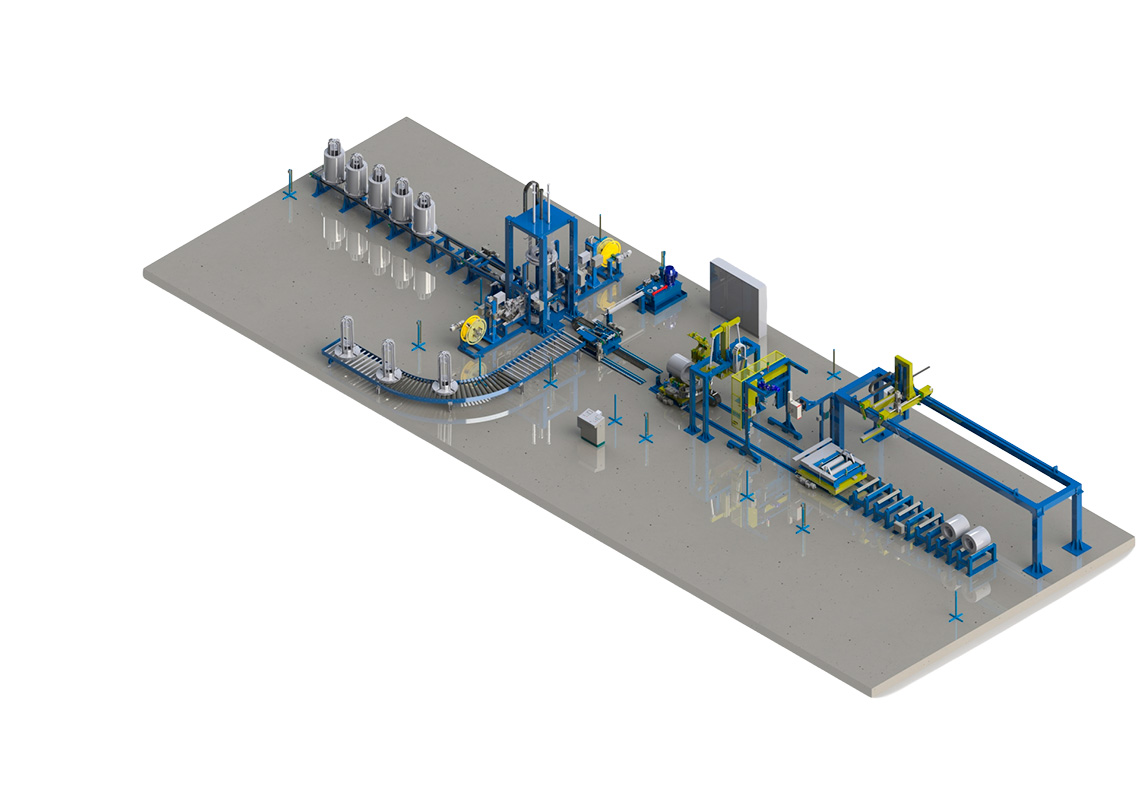
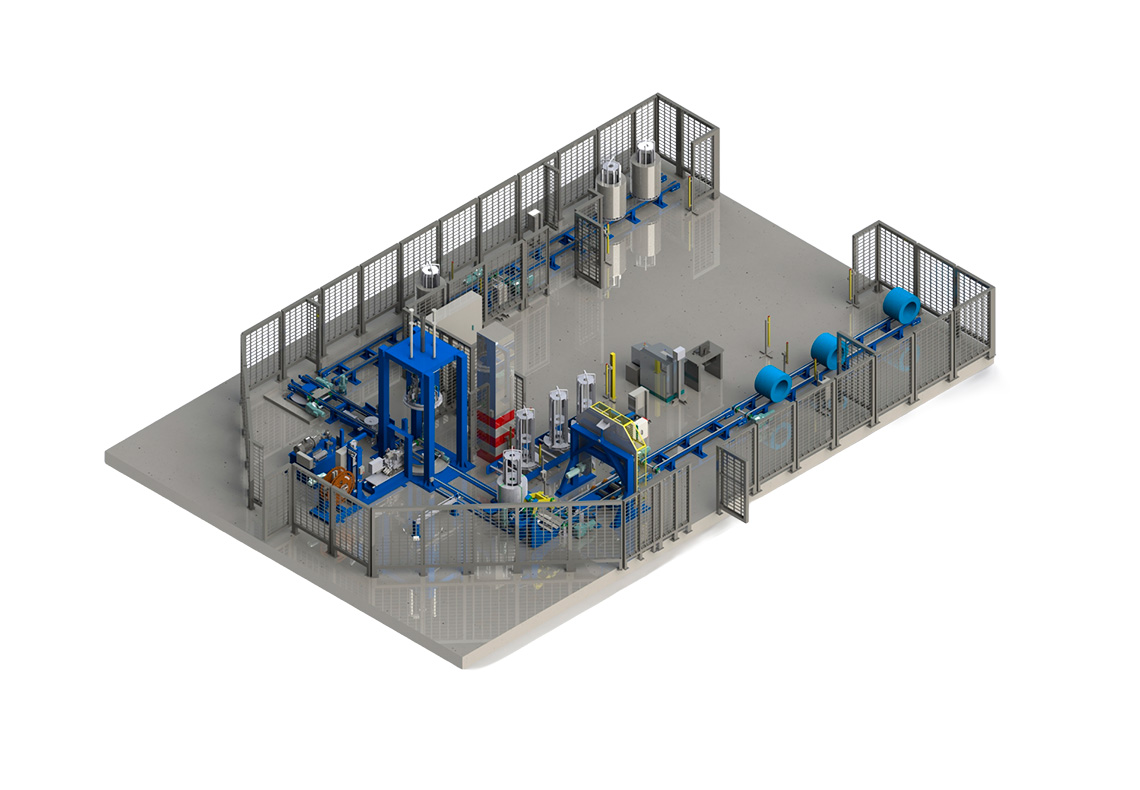
A packaging line is a set of connected stations (transport + processes) that automates the end of the line: from the arrival of the reel to its packaged exit.
In real Projects, a line can include operations such as pressing / compacting, strappping, laminating, weighing, labelling and storing, combined according to your Layout and Production.
Processes and stations that we can integrate
The lines are designed in a modular way, combining stations according to the process required by the customer.
Transport and synchronization between stations
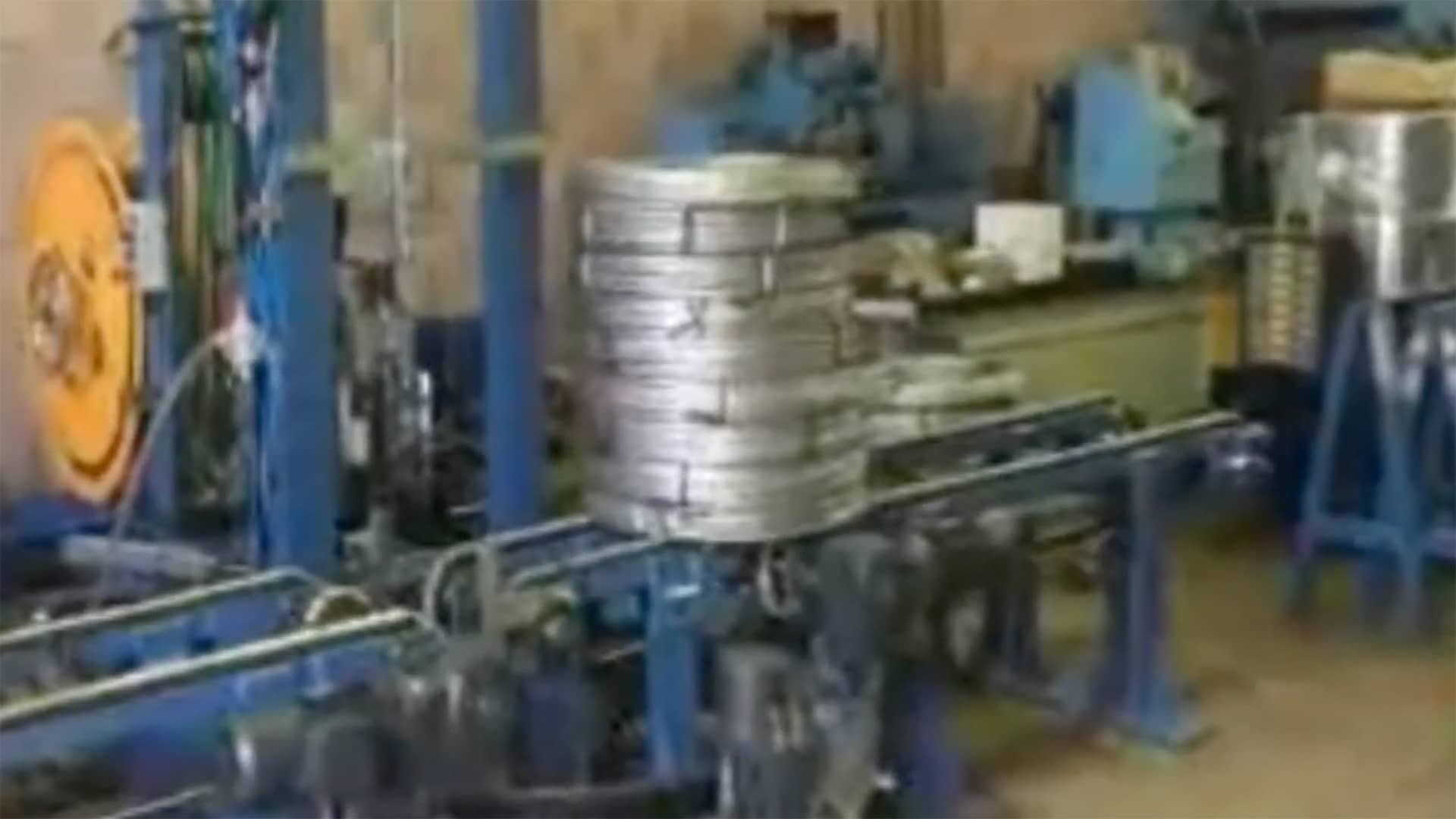
We move the coil in a controlled manner using different types of conveyors that can incorporate different stations within the same route and synchronize with the rest of the line.
When the process requires it, we integrate conveyor carts (with rollers or chains) for transfers between stations and to adapt to routes on guides/rails.
Compacting (pressing) of wire/wire rod coils
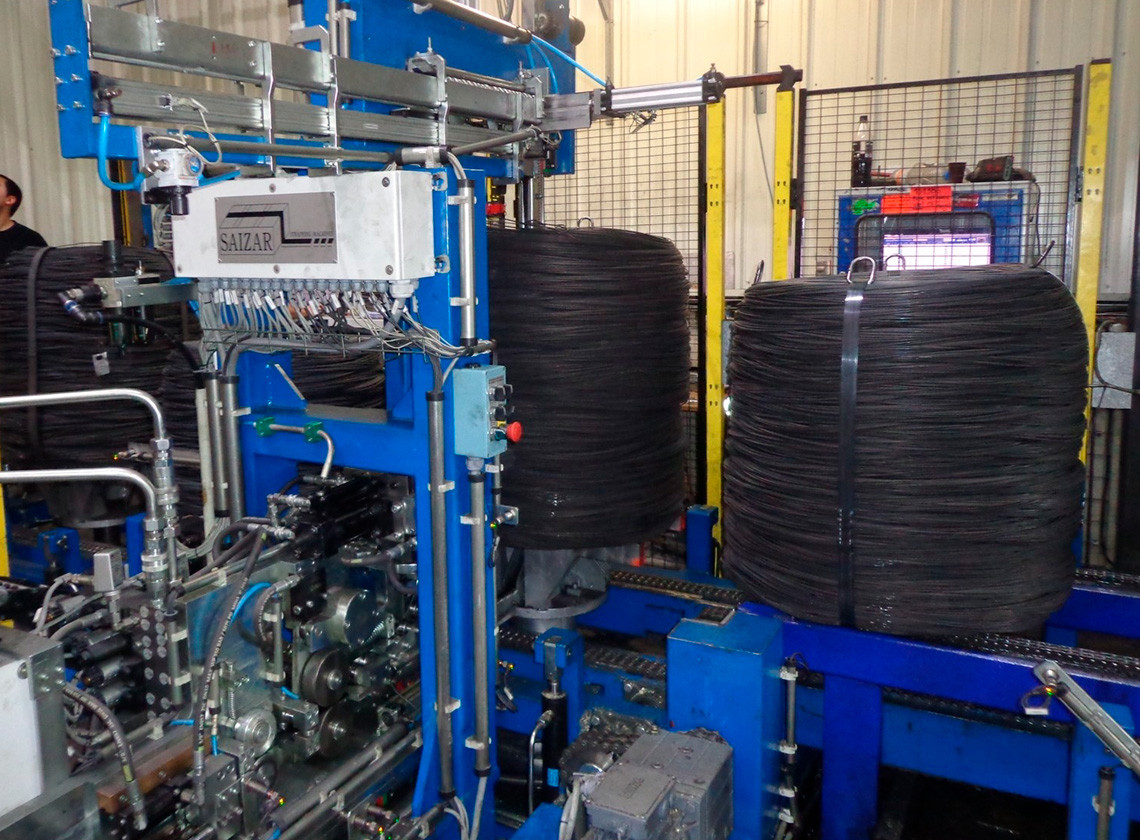
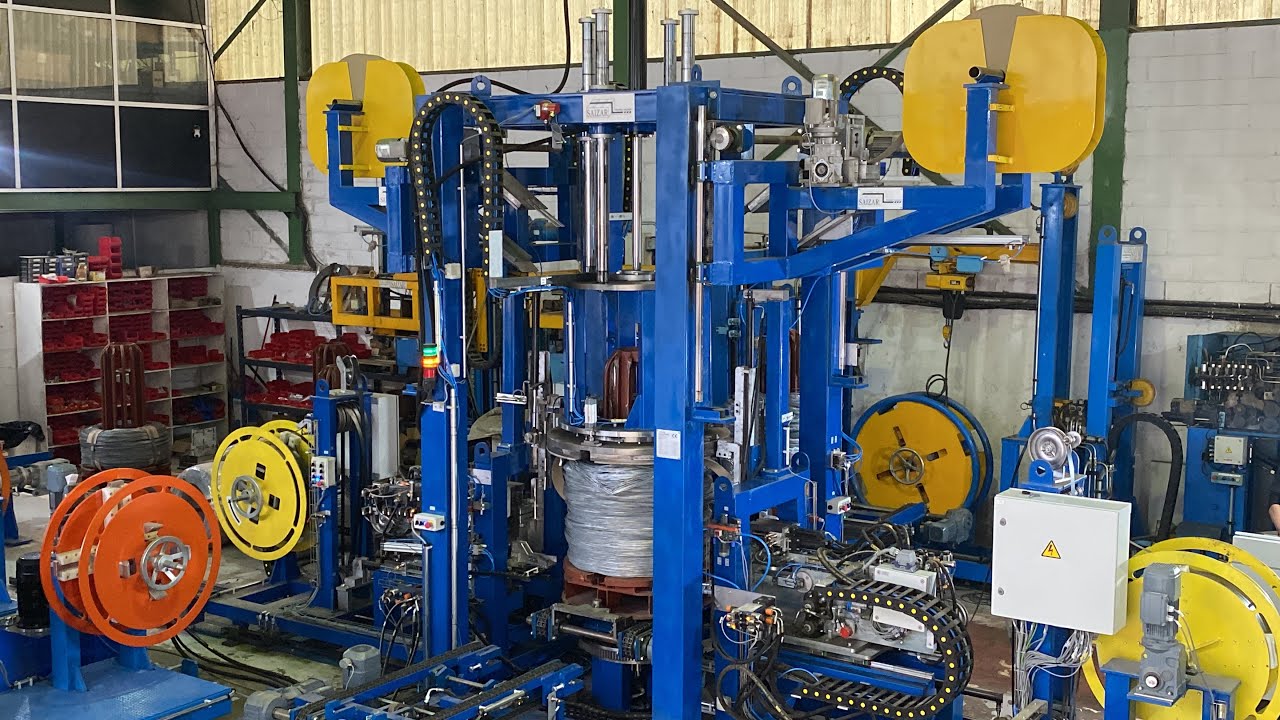
If you need to stabilize the coil before strapping, we install vertical or horizontal compacting systems depending on the working position of the coil. We protect the material with nylon plates and adjust the compacting force from the touch screen on the control panel.
This kind of compactors are usually hydraulic, with typical pressures ranging from 5 to 30 tons, depending on the application and diameter of the wire and wire rod.
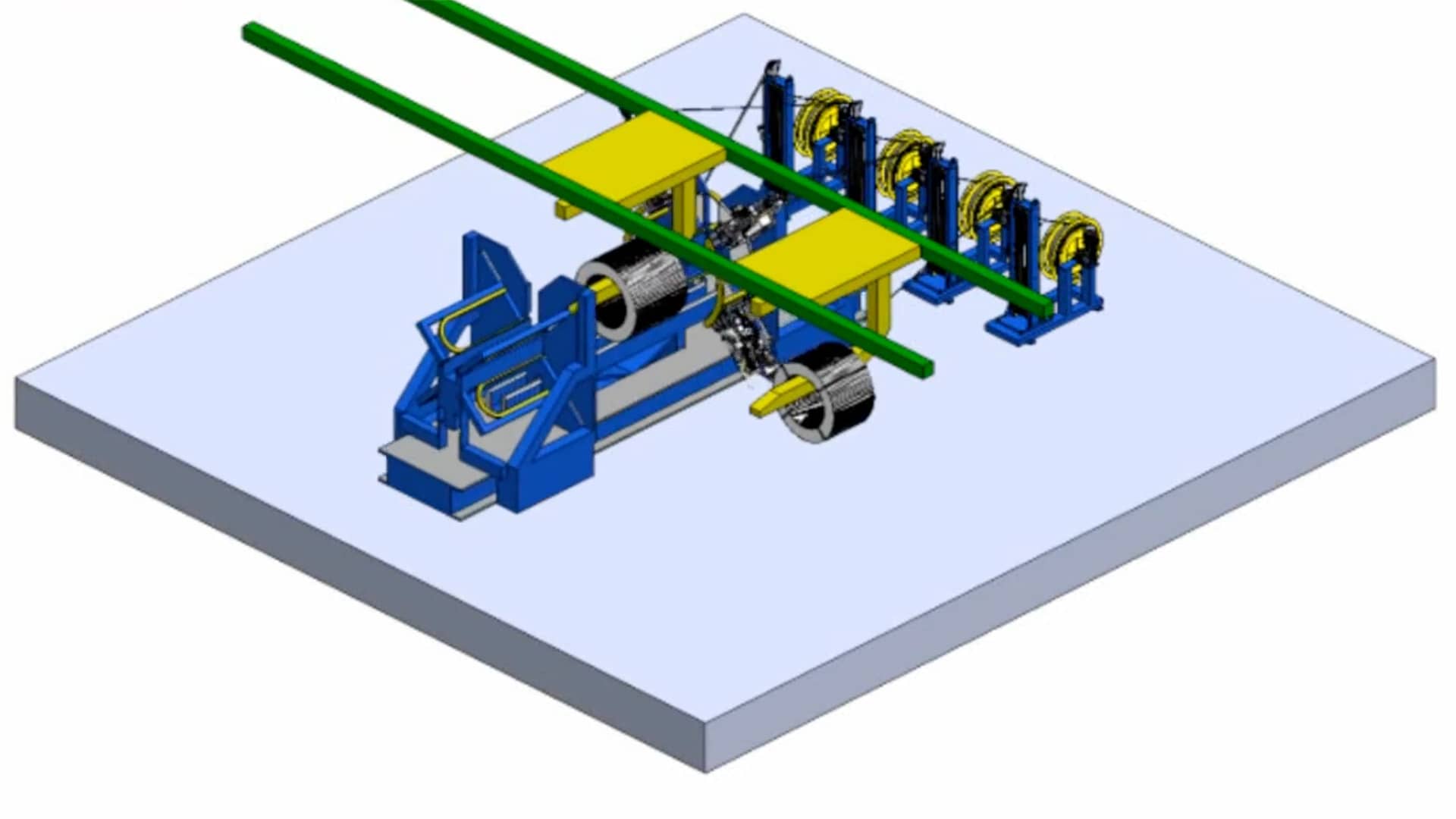
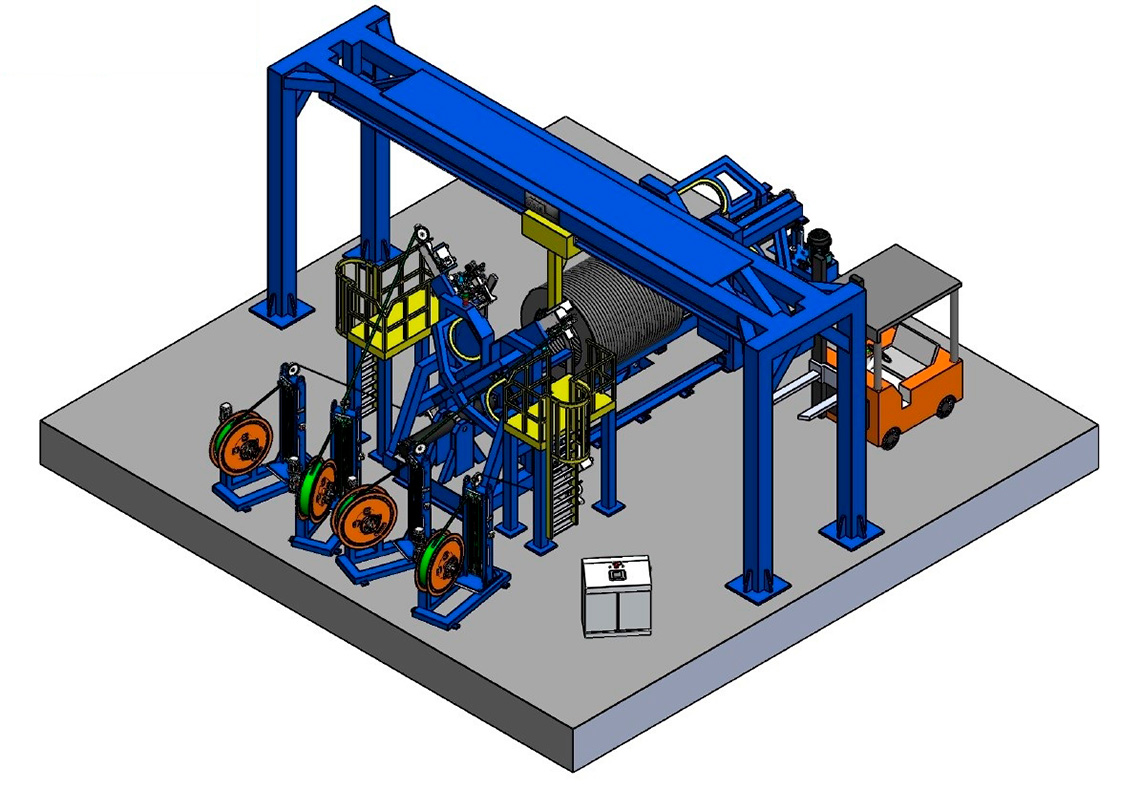
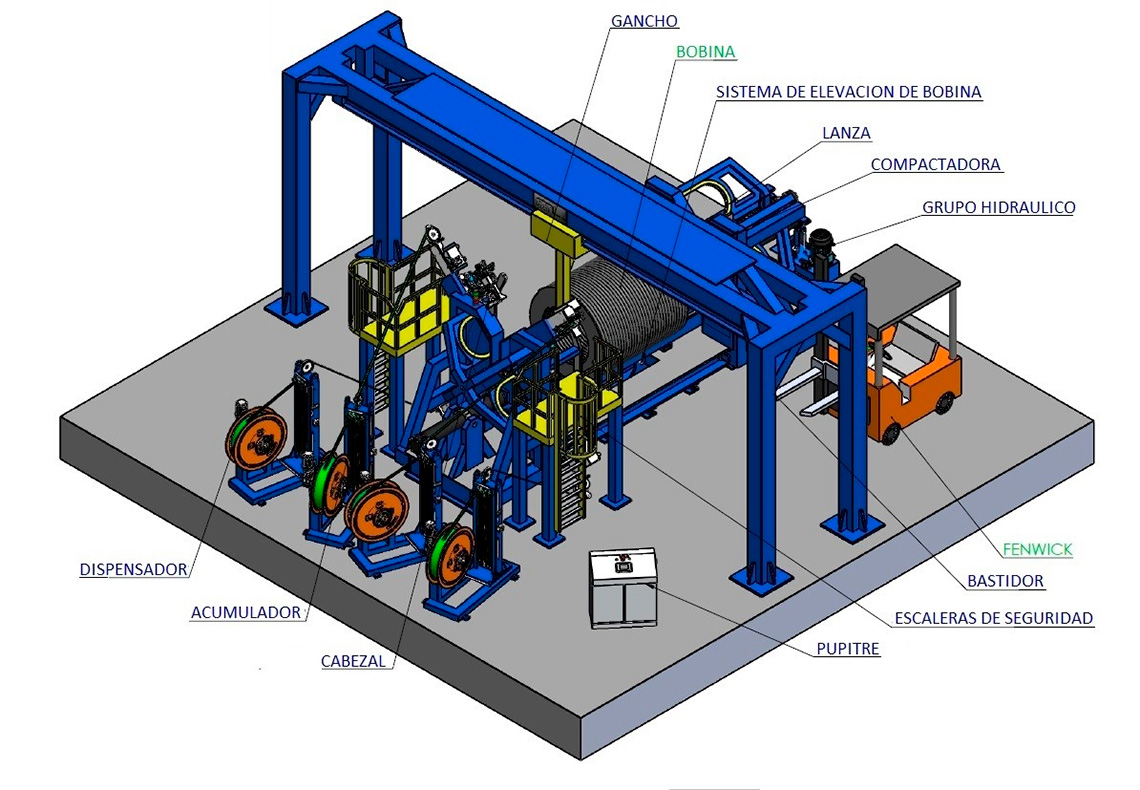
Depending on the required production, the compactors themselves can be equipped with anywhere from a single automatic strapping machine to a total of four automatic strapping machines working simultaneously.
Automatic radial strapping
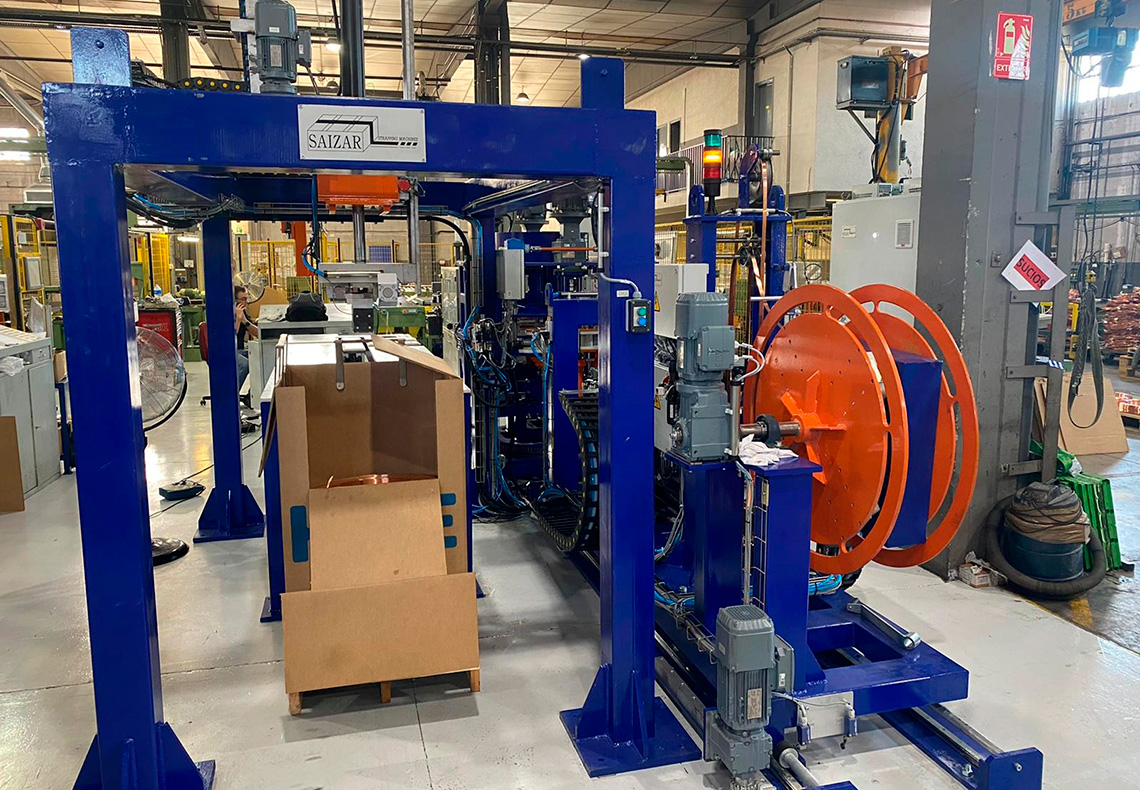
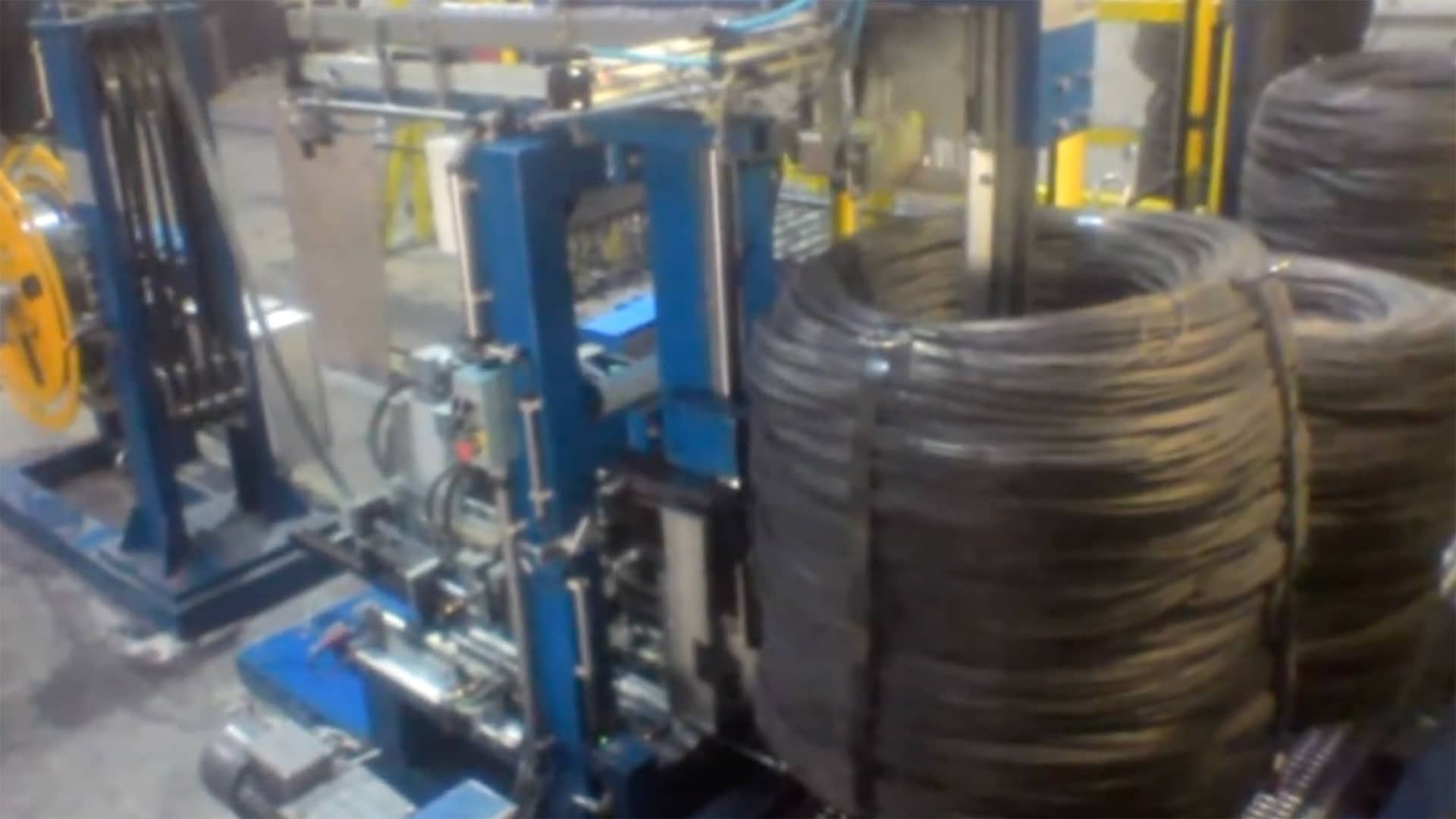
We integrate automatic strapping machines for coils capable of performing radial strapping with the coil in a vertical or horizontal position, using PET strapping and / or steel strapping in standard widths such as 16, 19, 25 o 32 mm.
Based on your process, we define:
- Type of strap: Steel or polyester straps can be used depending on the product needs.
- Architecture: fixed strapping machine with the coil moving to the strapping station or mobile strapping machine, depending on requirements.
- Type of sealing: for steel (e. g. notching, clinching, TIG) or for PET (e. g. friction-vibration).
- Quantity of strapping machines: depending on production, it may be necessary to install a series of strapping machines that perform strapping at the same time.
Strapping tables with rotation and centering systems
When the strapping is required in several positions, we use strapping tables with rotating system, with controlled stops (variator + encoder) and the possibility of including internal /external centering, lifting and strap guides, depending on requirements.
Reel removal and empty reel management
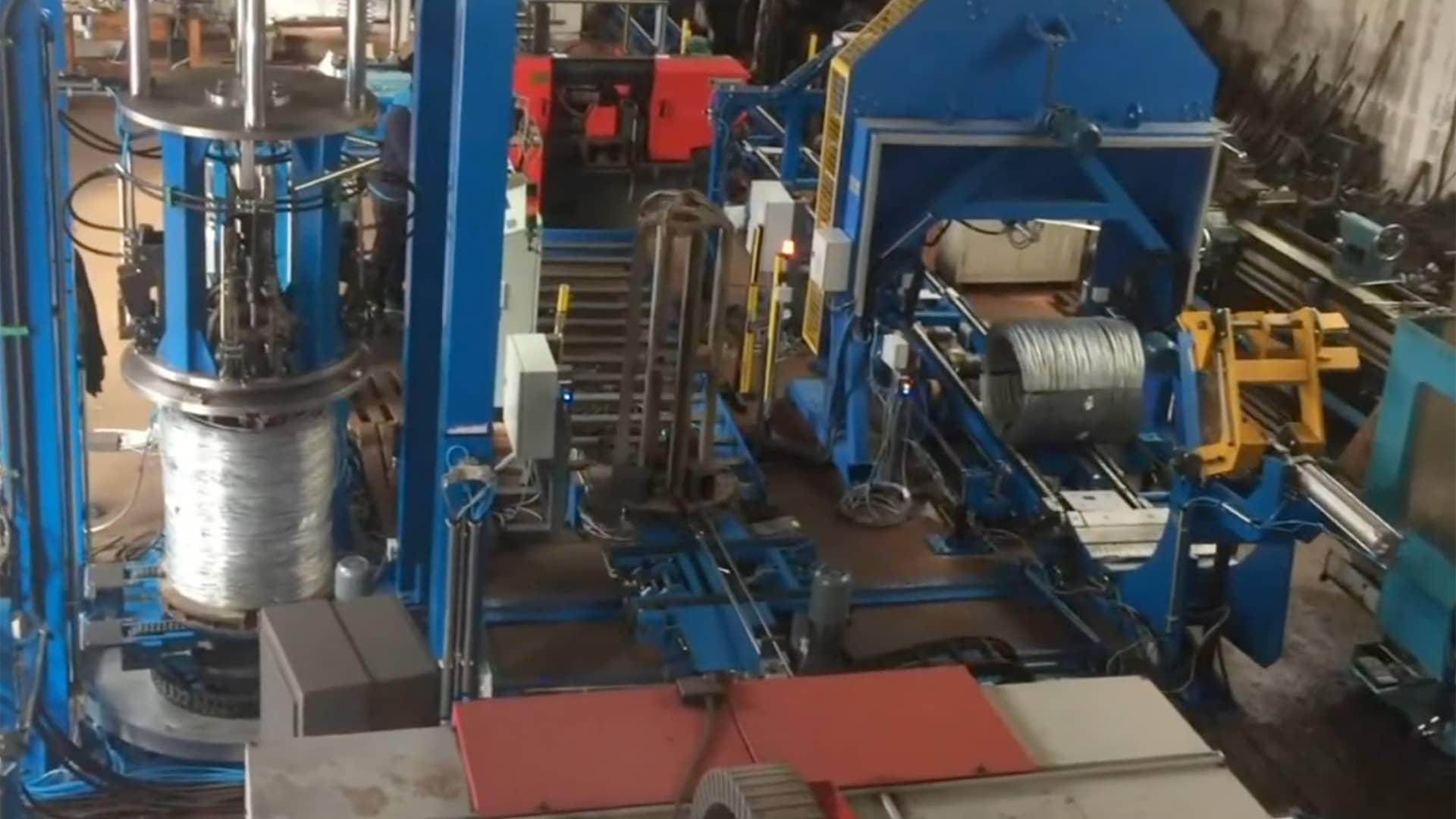
If your coils go inside the reels, we can automate the extraction after compacting and strapping: the assembly is turned over to leave the eye horizontally, the system holds the coil at its outer diameter and the carriage pulls the reel backwards, separating it from the coil itself.
Then, the coil can continue the strapping process trough conveyors, carts and elevators, taking it to the weighing, plastic wrapping and labeling station.
The empty reels are removed by an automatic pusher, which takes them from the turning cart and places them on a conveyor belt so that they can be transported to the end of the line, where the operator can remove them using a crane or forklift.
Safe lifting and handling
We integrate lifting systems for coils and other products, with suspensión by mechanical mechanical arms, magnets or vacuum, and the possibility of transfer to adjacent stations.
Integrated weighing and traceability
We can integrate weighing into carts, tables, conveyors, or lifts. In addition, the weight can be displayed and sent to the customer’s PC, and even transmitted to the labeling system for printing.
Lamination/protective wrapping
For wire coils, we have automatic laminating machines capable of performing radial lamination through the inner eye of the coil.
(In applications where the coil is bulky, some solutions also incorporate perimeter reinforcements to keep the wrapping stable during handling and transport.)
Automatic labeling
We install automatic labeling with a handling and placement system. The label can have two slots for the strap to pass through, so that it is positioned next to the strapping and allows the product to be controlled using the printed information. The label can also be stuck directly onto the product once it has been laminated.
Storage and dispatch
Complete lines can include storage stations where the product can be stored safely so that it can then be removed by the operator, either by crane or forklift.
SAIZAR packaging and strapping systems


Choice of strapping (PET vs steel) on wire/wire rod coils
The choice depends on the product, temperature, wire diameter, tension level, and storage & transport conditions.
- Steel strapping: it is usually chosen for very heavy, non-compressible loads, con with large wire and wire rod diameters or “hot” applications (steel at high temperaturas), due to its high strength.
- PET strap: Provides elasticity and helps maintain tension when there is settling or variations in the product/storage (depending on quality and conditions).
At SAIZAR we size the assembly (compactado + strapped + protected) so that the packaging is stable without compromising your productivity.
Benefits for your plant
Increased safety and reapeatability:
standardized and synchronized processes between stations
More stable coils:
thanks to adapted compaction (vertical/horizontal) and adjustable compaction forces
Optimized radial strapping:
with selection of strapping type and sealing as needed
Less manual handling:
lifting, carts, tipping, reel removal, and automatic transfer
Real traceability:
integrated weighing + automatic labeling (and the option to send data to customer systems).
Increased productivity:
as this is an automatic line, productivity will be higher than with manual application
Contact our technical department for a customised solution
What information do we need to design your line
To define the line and refine the offer, we will normally ask you for:
Minimum and maximum coil dimensions:
inner diameter, outer diameter, height or width, and wire/wire rod diameter
Weight, maximum temperature, and productivity:
(coils/hour)
How they move/evacuate:
cart, elevator, rollers, or chains
Transport:
if the coil is on a reel/winder/pallet or without support
Transport position:
vertical or horizontal axis (parallel or perpendicular to the direction)
Number of straps and available space:
minimum/maximum per coil and cycle logic
“Turnkey project” and technical assistance
We can supply a turnkey project, adjusting the design to your needs and the circumstances of your plant..
We also offer technical assistance for maintenance and spare parts supply, so that the Line can operate 24/7.
Frequently asked questions
What is the difference between radial and circumferential strapping on coils?
In radial strapping, the strap passes through the eye of the coil; in circumferential strapping, it wraps around the perimeter of the coil. We can configure both in the same solution according to your shipping standards. The most common approach for this type of application is to use radial strapping.
The coil must always be compacted before strapping?
Not always, but it is common when maximum stability is required. We design vertical or horizontal compaction depending on the position of the coil and protect the material to prevent damage.
Can you work with spools on reels and extract the reel automatically?
Yes, we integrate reel extraction with tilting and perimeter clamping, and move the reel to the weighing, laminating, and labeling stations.
What productivity can an automatic line achieve?
It depends on the dimensions, number of straps, layout, and stations. Complete processes (compacting, strapping, plastic wrapping, weighing, labeling, and storage) were integrated into a reference line with a specified capacity of 25 coils/hour.
How do we decide between PET strapping and steel strapping?
Steel is typically used for very heavy/“hot” loads or large wire & rod diameters; PET provides elasticity and tension maintenance under certain conditions. We define it with your product and process data.
Can weighing be integrated without stopping production?
We can integrate weighing into different equipment (carts, tables, conveyors, or elevators) and configure it depending on whether the product is moving or stationary during weighing.
Can the weight be automatically printed on the label?
Yes, the system allows data to be transmitted and, in integrated installations, sent to the labeling equipment for printing.
What type of plastic coating do you recommend for wire coils?
For wire coils, we offer radial plastic coating on the inner eye, and we size it according to the level of protection required.
How do you solve the twist for strapping in multiple positions?
Using tables or stations with a rotating system, with controlled stops and synchronization with input/output conveyors. In other cases, it is the strapping machine that is placed in each strapping position, rotating around the coil to be strapped.
Can you adapt the layout to the available floor space?
Yes, we design carts, conveyors, tables, lifting equipment, and stations according to the dimensions/weight of the material and the available space.